Your pain is real. No one can tell you pain is in your head, because pain is always a subjective and personal experience. If someone is dismissive of your symptoms, they do not understand pain.
Pain is Protecting you! Many of us assume that when we are in pain there must be some injury, inflammation, tight muscle or knots to blame. Tissue factors contribute but often, our nervous systems are preventing injury by being hyper-vigilant.
Pain is Biopsychosocial. Did you know your emotions, social environment, sleep, fitness level, as well as your belief systems can all make the body more susceptible to pain?
So what? If so many things contribute to pain, this means there are many ways to reduce it!
Healing from pain starts with bolstering awareness of our own stressors
BIOLOGICAL: e.g. Could my fitness level use a boost? Am I getting over a cold? Have I been sleeping lately?
PSYCHOLOGICAL: e.g. An increase in your workload or conflict with your boss? Depression, anxiety or grief
SOCIAL: e.g. Am I struggling to make ends meet? Does systemic racism or prejudice impact my identity?
Resources
All of these stressors contribute to how much pain we experience from one day to the next. If this is confusing, please utilize the resources below to develop a deeper understanding of how multifactorial our pain system is.
Books:
It Doesn’t Have to Hurt: Your Smart Guide to a Pain-Free Life by Dr. Sanjay Gupta (neurosurgeon)
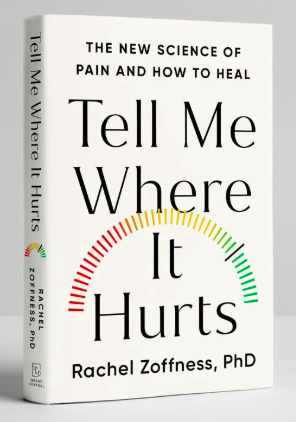
Tell Me Where it Hurts by Rachel Zoffness, PhD (psychologist and pain researcher)
The Explain Pain Handbook: Protectometer by David Butler & Lorimer Moseley
Websites, Blogs, Online Resources:
The Healthskills Blog, Bronnie Lennox, PhD, MSc, Occupational Therapist, Educator
Recovery Strategies Workbook, Greg Lehman, PT, Chiropractor, Strength & Conditioning Coach
Why am I in pain? Simply learning more about pain reduces our suffering
A TEDx talk where pain researcher Lorimer Moseley explains how pain occurs in the brain.
Let’s Connect
Do you have any hesitations about massage? Do you simply want to learn more? I love chatting with people before meeting with them, so please reach out with any questions you might have to make sure we're a good fit.